
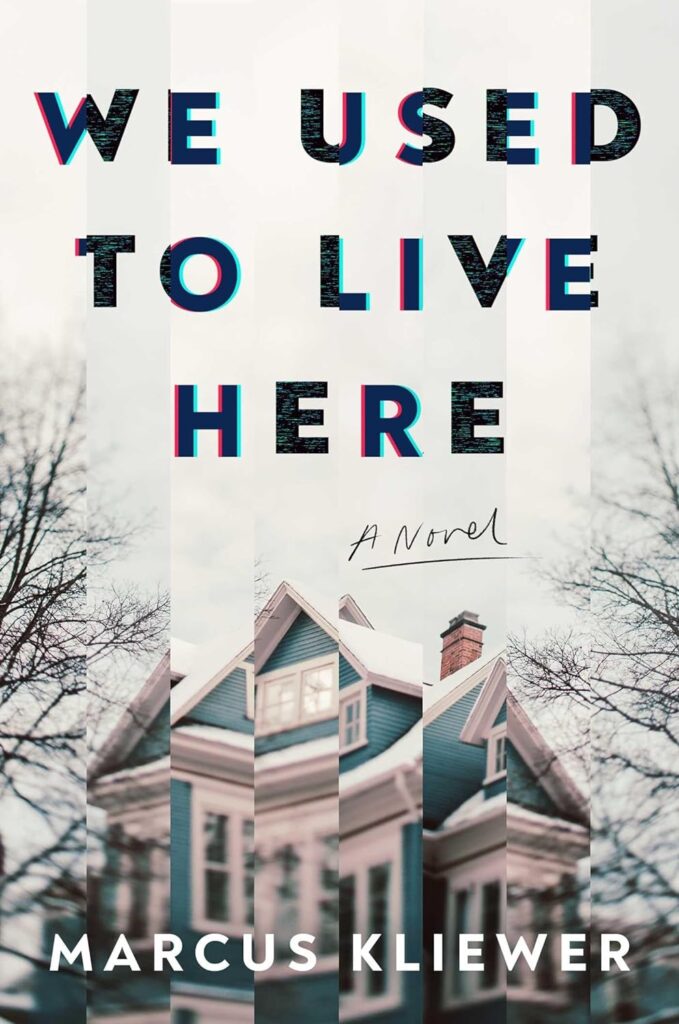
We Used to Live Here (2024)
Select Sections to Print
×Book Details
We Used to Live Here (2024)
Jump to Section
⚠️ Trigger Warnings
- Animal death
- Animal violence
- Attempted murder
- Bigotry
- Blood and gore
- Body horror
- Capgras delusion
- Claustrophobia
- Death
- Gaslighting
- Graphic violence
- Home invasion
- Identity erasure
- Involuntary psychiatric institutionalization
- Mental illness
- Psychological abuse and manipulation
- Religious abuse
- Religious trauma
- Self-harm
- Strangulation/choking
- Violence
⏱️ 2-Minute Spoiler Summary
Eve Palmer reluctantly lets Thomas Faust and his family into her remote home after Thomas claims he grew up there. A snowstorm traps them overnight, and increasingly bizarre events make Eve suspect that the family—and even her partner Charlie—may not be who they appear to be. Her neighbor reveals that Thomas lied about his childhood, while a mysterious Alison leaves evidence claiming Thomas is a supernatural “mimic” capable of altering memories and identities.
Eve eventually kills Paige during a violent confrontation and nearly kills Thomas before police arrest her. Afterward, she discovers that reality itself has seemingly been rewritten: all records identify her as Emma Faust, Thomas’s mentally ill sister, while Charlie—now Charlotte Bastion—claims they broke up years earlier. Eve is committed to an asylum.
Three years later, Thomas visits and gives her Charlie’s locket. Inside is a photograph of Eve Palmer, the only remaining evidence that Eve’s original identity—and the life everyone else insists never existed—was real.
📖 Full Spoiler Summary
The Faust Family Arrives
On a freezing Friday night, Eve Palmer is alone at 3709 Heritage Lane, the isolated fixer-upper she recently bought with her partner, Charlie Bastion. Eve knows she has terrible instincts when it comes to other people. She is a chronic people-pleaser who notices plenty of useless details while somehow overlooking the things that should actually make her nervous.
That becomes a problem when a family of five unexpectedly appears at her door.
The father, Thomas Faust, is handsome and charming, with a square jaw and the polished smile of a Hollywood leading man. He explains that he grew up in Eve’s house and was passing through with his family. He only wants to show his children their dad’s childhood home, and although Eve immediately feels uncomfortable, leaving a family standing outside in the bitter cold feels cruel. She reluctantly lets them in.
Thomas introduces his wife, Paige, a petite blonde whose silver cross reflects her deeply religious beliefs, and their three children. Teenager Kai seems smug and uninterested in everything around him. Newton, the anxious middle child, is twitchy and nervous behind his round glasses. Seven-year-old Jenny is endlessly curious and records her observations in a Blue’s Clues notebook like a tiny investigator.
At first, Thomas’s memories make his story seem believable. He points out places where the house has changed, including where an antler chandelier once hung and where black-and-white tiles have been covered over. He also notices strange symbols carved into the woodwork, which he claims were made by his sister, Alison, to protect the family from bad luck.
Then Jenny disappears.
A Night at Heritage Lane
Thomas insists Jenny has started a game of spontaneous hide-and-seek, and the adults begin searching the house. In the basement, Eve notices Thomas behaving strangely. For several unsettling moments, he seems almost frozen, failing to respond when she calls his name. He eventually claims Jenny has crawled into a concrete nook too small for the adults to reach and suggests they simply wait until she decides to come out.
Before Eve can figure out what to make of any of this, Charlie arrives home and is understandably alarmed to discover an entire family of strangers inside their house.
Getting rid of them quickly becomes impossible. A winter storm has closed the Kettle Creek Bridge, the only route on or off the mountain, leaving the Fausts stranded. Eve and Charlie reluctantly agree to let them stay overnight.
Dinner only makes the situation more uncomfortable. Paige begins questioning Eve about her relationship with Charlie, her lack of religion, and what Paige considers her questionable “lifestyle choices.” Thomas eventually changes the subject by explaining what happened to Alison.
According to him, his sister became convinced that something was wrong with Heritage Lane. She believed the house itself was changing and eventually decided that the members of her own family had been replaced by imposters. Her paranoia became so severe that she was institutionalized.
Later that night, Eve’s own grip on reality begins to feel increasingly fragile. Her anxious thoughts take the form of Mo, a white-furred toy monkey she lost as a child, who has become a kind of imaginary voice for all the fears she normally tries to suppress.
Then Eve sees someone on the basement stairs.
At first, she thinks it is one of the children. Instead, she finds herself staring at a gaunt, adult figure who simply stands there watching her.
Charlie Disappears
The following morning, Eve wakes disoriented and learns from Thomas that Charlie has already left for an urgent meeting in town. The explanation makes little sense, especially with the bridge supposedly closed, and Eve’s suspicion deepens when she finds Charlie’s locket hanging from a nail in the house—a nail Eve distinctly remembers removing.
Something is wrong, and she no longer trusts the people inside Heritage Lane enough to ask them about it.
Eve walks through the snow to visit her elderly neighbor, Heather, a longtime resident known for fostering stray dogs. When Eve tells her about Thomas and Alison, Heather immediately contradicts Thomas’s entire story.
Thomas Faust never had a sister.
He was an only child.
The girl called Alison was actually a mysterious drifter the Faust family took into their home. Over time, Alison became convinced the Fausts were not human but “mimics.” Her apparent breakdown ended violently when she attacked eight-year-old Thomas with a fountain pen, stabbing him thirty-seven times.
While Eve is still trying to process this completely different version of the past, she receives a phone call.
The caller sounds exactly like Charlie.
She claims she never left Heritage Lane.
Even worse, Charlie warns Eve that the woman pretending to be her isn’t really Charlie—and that the dog inside the house isn’t their dog, Shylo, either.
Eve Becomes Aunt Emma
On her way back through the woods, Eve encounters a withered, badly scarred old man living in an abandoned cabin. His warning is simple but terrifying: the people in Eve’s house are not what they appear to be.
By the time Eve reaches Heritage Lane, even the house seems to be betraying her memories. A stained-glass window depicting an apple tree has disappeared, replaced by ordinary glass. Familiar details no longer match what she knows should be there.
The Fausts have changed too—or, more accurately, their understanding of Eve has.
They now call her “Aunt Emma.”
According to them, she isn’t Eve Palmer at all. She is Emma Faust, Thomas’s mentally unstable sister.
Desperate for proof that she still knows who she is, Eve searches the house. In the attic, she encounters the skeletal woman in a hospital gown she saw earlier: Alison. Rather than helping her, Alison forces Eve into a terrifying game of hide-and-seek.
Eve eventually takes refuge in a hidden room in the basement, where she discovers a note written by the real Alison Faust. The message confirms Eve’s worst fear: Thomas is a mimic.
According to Alison, the creature posing as Thomas has existed on the property since before Heritage Lane was even built. It doesn’t merely imitate people. It can alter memories and identities, gradually reshaping the reality of anyone trapped within its influence.
Eve finally understands that she cannot trust the house, the Fausts, or even her own memories.
The Night Ends in Blood
Convinced she is surrounded by creatures pretending to be human, Eve becomes desperate to survive.
She grabs Paige and holds her hostage with a corkscrew, hoping to force the others to back away. Instead, the confrontation erupts into violence. Paige manages to stab Eve in the leg, and during the struggle, Eve accidentally drives the corkscrew into Paige’s throat.
Paige dies.
Thomas sees his wife bleeding to death and attacks Eve in a murderous rage. Eve fights back with a hammer, smashing his jaw and tearing open his cheek. She then wraps tire chains around him and tries to choke him.
Before she can finish, the police storm Heritage Lane. Among them is the barrel-chested officer Eve previously encountered at a gas station.
But they aren’t there to rescue Eve.
They arrest her.
Eve Palmer No Longer Exists
After the bloodbath, Eve expects investigators to uncover what happened at Heritage Lane. Instead, she discovers that Thomas has already won in a far more terrifying way.
As far as the rest of the world is concerned, there is no Eve Palmer.
Her official identity is Emma Faust, Thomas’s troubled sister. Records show that she has lived with Thomas and Paige for years after separating from a woman named Charlotte Bastion.
When authorities contact Charlotte, she confirms the story.
According to the woman Eve remembers as Charlie, the two of them broke up years ago and haven’t spoken since.
With every official record and witness supporting Thomas’s version of events, Eve has no way to prove that the life she remembers ever existed. She is found not guilty of Paige’s murder by reason of insanity and committed to Greenwood Asylum.
Three years pass.
Thomas eventually comes to visit her.
His face still bears scars from their fight, although implants have restored the perfect teeth behind his familiar smile. He tells Eve that he forgives her for what happened to Paige, calmly maintaining the fiction that she is his sister Emma.
Before leaving, however, Thomas gives her something that shouldn’t exist.
Charlie’s locket.
Inside is a photograph of Eve Palmer.
It is the only surviving evidence Eve possesses that the woman she remembers being was ever real at all. The rest of the world knows her as Emma Faust, and Thomas has successfully rewritten her life around her.
But the photograph proves that Eve Palmer existed—even if Eve is now the only person left who remembers her.
🔚 Ending Explained
How We Used to Live Here Ends
The nightmare at 3709 Heritage Lane reaches its bloody climax when Eve Palmer becomes convinced that the Faust family has not simply invaded her home—they are systematically replacing her life.
Believing that her partner, Charlie Bastion, has either been taken captive or replaced by a doppelgänger, Eve confronts Paige Faust in the kitchen. Their struggle turns violent when Paige stabs Eve in the thigh with a steak knife. Eve fights back, driving a corkscrew into Paige’s throat and killing her.
Paige’s death sends Thomas Faust into a rage. He chases Eve into the attic, where she attacks him with a hammer, tearing open his cheek and shattering his jaw. But Eve hesitates when she sees how human and vulnerable he appears. For a moment, Thomas seems less like the supernatural creature she has imagined and more like an ordinary, breakable man.
That hesitation nearly kills her.
Thomas recovers and begins strangling Eve, making cryptic claims that his family “sowed the forest” and “built the foundations,” suggesting that the Fausts’ connection to the house—and perhaps reality itself—is far older and stranger than Eve understands. Eve manages to fight back with tire chains, but before she can kill him, the police arrive and arrest her.
Then comes the book’s real horror.
Everything Eve knows about herself has been rewritten.
Official records identify her not as Eve Palmer, but as Emma Faust, Thomas’s mentally unstable sister. Her neighbors support this version of events. Even Heather fails to validate Eve’s identity. Most devastatingly, the woman the world recognizes as Charlotte Bastion does not acknowledge Eve as her partner.
The killings become known as the Faust Family Bloodbath, and Eve is found not guilty by reason of insanity. She is committed to Greenwood Asylum, where every attempt to insist that she is Eve Palmer only reinforces everyone else’s belief that “Emma” is delusional.
Three years later, Thomas visits her.
His injuries have healed, and he behaves like the compassionate brother forgiving the mentally ill sister who murdered members of their family. Before leaving, however, he gives Eve Charlie’s locket.
Inside is a photograph of Eve Palmer.
It is seemingly the last surviving physical evidence that the woman Eve remembers being ever existed.
What the Ending Means
The final twist is more disturbing than simply revealing that Thomas is a monster or that the house is haunted. Eve loses something much more fundamental than her home: she loses ownership of reality itself.
Throughout the novel, Eve keeps encountering things that should be impossible—rooms change, architectural details disappear, memories conflict, people behave as though events happened differently than she remembers. By the ending, that process has expanded beyond the house. Reality now agrees with Thomas.
Eve doesn’t.
And that distinction no longer matters.
The cruel genius of the ending is that Eve actually has evidence supporting her version of events. The locket strongly suggests that Eve Palmer was real. But truth without witnesses, records, or social recognition becomes practically useless. Eve knows who she is, yet everyone around her possesses a different version of her identity—and their version has become the official one.
The Locket
The locket is therefore the most important object in the ending.
It is a tiny surviving fragment of Eve’s original reality. Everything else has been overwritten, but the photograph remains.
Thomas giving it back to her makes the gesture especially sinister. If his goal were merely to convince Eve that she had imagined everything, destroying the photograph would make more sense. Instead, he lets her keep it.
That suggests he wants her to know she was right.
The locket becomes less a gift than a trophy. Thomas can afford to give Eve proof because proof no longer has power. She could show the photograph to doctors, police officers, or strangers, but it would probably be interpreted as another artifact incorporated into “Emma Faust’s” delusion.
Thomas has reached the point where he doesn’t need to hide the truth from Eve. He only needs to make sure nobody believes her.
Thomas’s “Forgiveness”
That also changes the meaning of Thomas forgiving Eve.
On the surface, he appears extraordinarily compassionate: a man visiting the sister responsible for destroying his family and telling her that he bears her no hatred.
But within Eve’s version of reality, the gesture is an act of domination.
Thomas has taken the role of victim while Eve has been transformed into the perpetrator. He doesn’t merely defeat her physically; he rewrites the story until he becomes the sympathetic survivor of her violence.
His strange comments about his family having “sowed the forest” and “built the foundations” further suggest that Thomas may be connected to something far larger than one family occupying one house. The Fausts may be participants in—or manifestations of—a reality-altering system Eve has only begun to glimpse.
Eve’s Tragic Choice
Eve’s downfall also comes from one of her most sympathetic qualities: she refuses to abandon Charlie.
She could have fled. Instead, she returns because she believes the real Charlie is still somewhere inside the nightmare and needs her.
That decision traps her.
The novel repeatedly creates a kind of supernatural quicksand: the harder Eve struggles to prove what is happening, the more insane she appears. Breaking into places, attacking the Fausts, screaming that people have been replaced—all of these actions make sense from Eve’s perspective. Once reality has been rewritten, however, those exact actions become evidence supporting the story that she is Emma Faust suffering from severe mental illness.
The trap is therefore almost perfect. Resistance itself becomes proof of guilt.
Why the Ending Is So Unsettling
The novel ultimately leaves some ambiguity over exactly what happened, but far less ambiguity over whether something impossible happened.
The locket matters because it prevents the simplest interpretation—that Eve merely imagined the entire conspiracy. There is still a crack in the rewritten reality.
What remains unclear is the mechanism behind it. Is Thomas human? Is the Faust family part of something supernatural? Is the house itself responsible? Are there multiple realities overlapping and replacing one another? The references to other “Old Houses” suggest that 3709 Heritage Lane may be only one location within a much larger phenomenon.
That uncertainty is deliberate. Explaining the rules completely would make the horror manageable.
Instead, the ending leaves Eve—and the reader—with proof that something is wrong but no reliable framework for understanding it.
Eve’s Future
Thomas hints that Eve might eventually be released if she behaves and nothing “sets her off.” On paper, that sounds hopeful.
It really isn’t.
Her possible freedom appears conditional on accepting the identity imposed upon her. To leave Greenwood, Eve may eventually have to stop insisting that she is Eve Palmer and begin behaving like the recovered Emma Faust everyone expects her to be.
So the final threat isn’t necessarily that Eve will spend the rest of her life locked inside an asylum.
It’s that she might someday walk out.
She could regain her freedom, interact with the world, and perhaps even build another life—but only after allowing the world to bury the person she knows she actually was.
That makes the ending’s central horror profoundly existential: Eve survives, but Eve Palmer does not.
The house doesn’t need to kill its victims.
It can simply make the world forget they ever existed.
👤 Characters & Fates
🔶 Main Characters
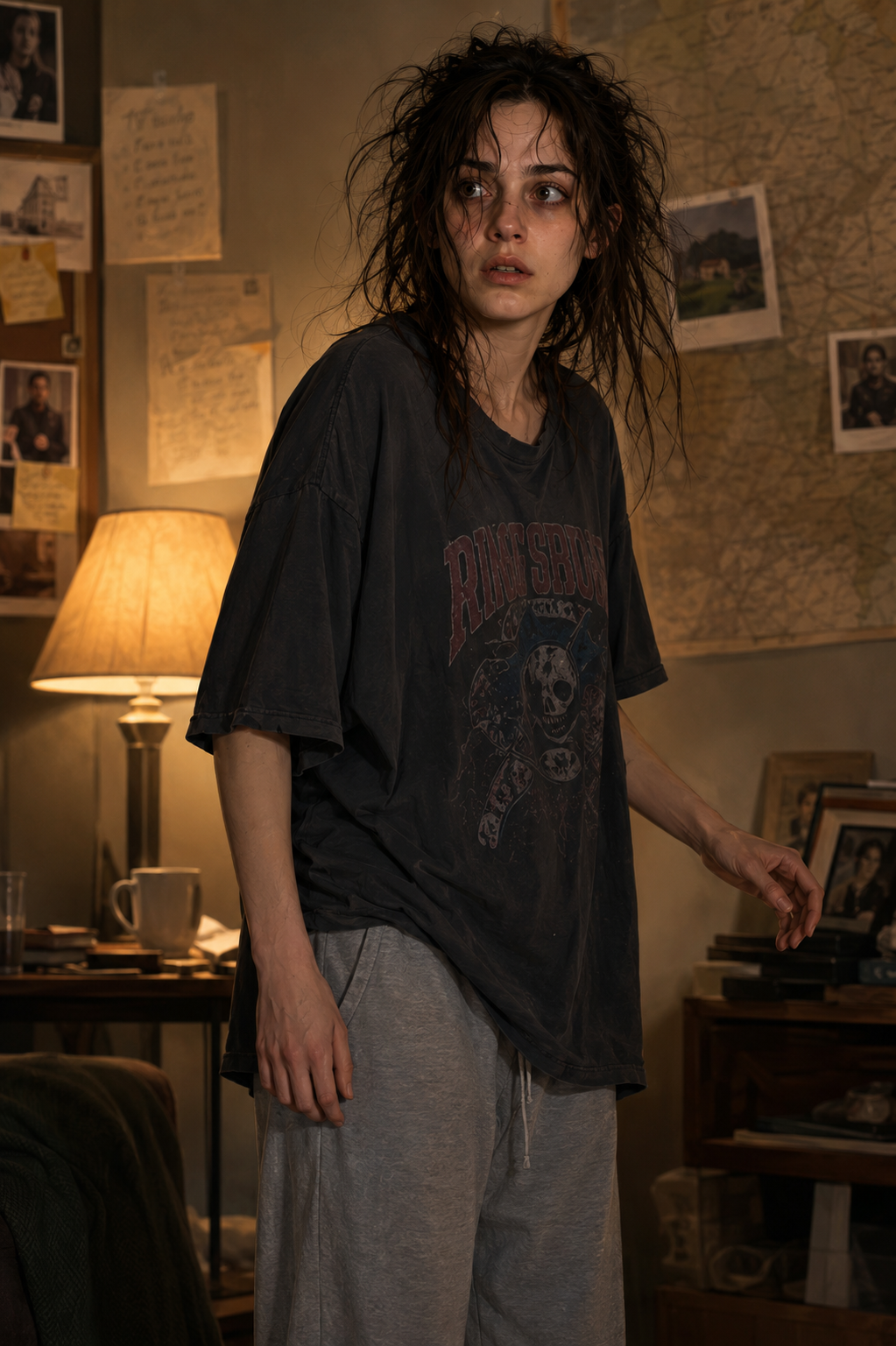
Kills Paige and badly maims Thomas before being arrested; reality rewrites itself so that Eve Palmer supposedly never existed and she is actually Emma Faust, Thomas’s mentally unstable sister. She is committed to Greenwood Asylum, where she remains three years later with only a locket supporting her memories of her former life.
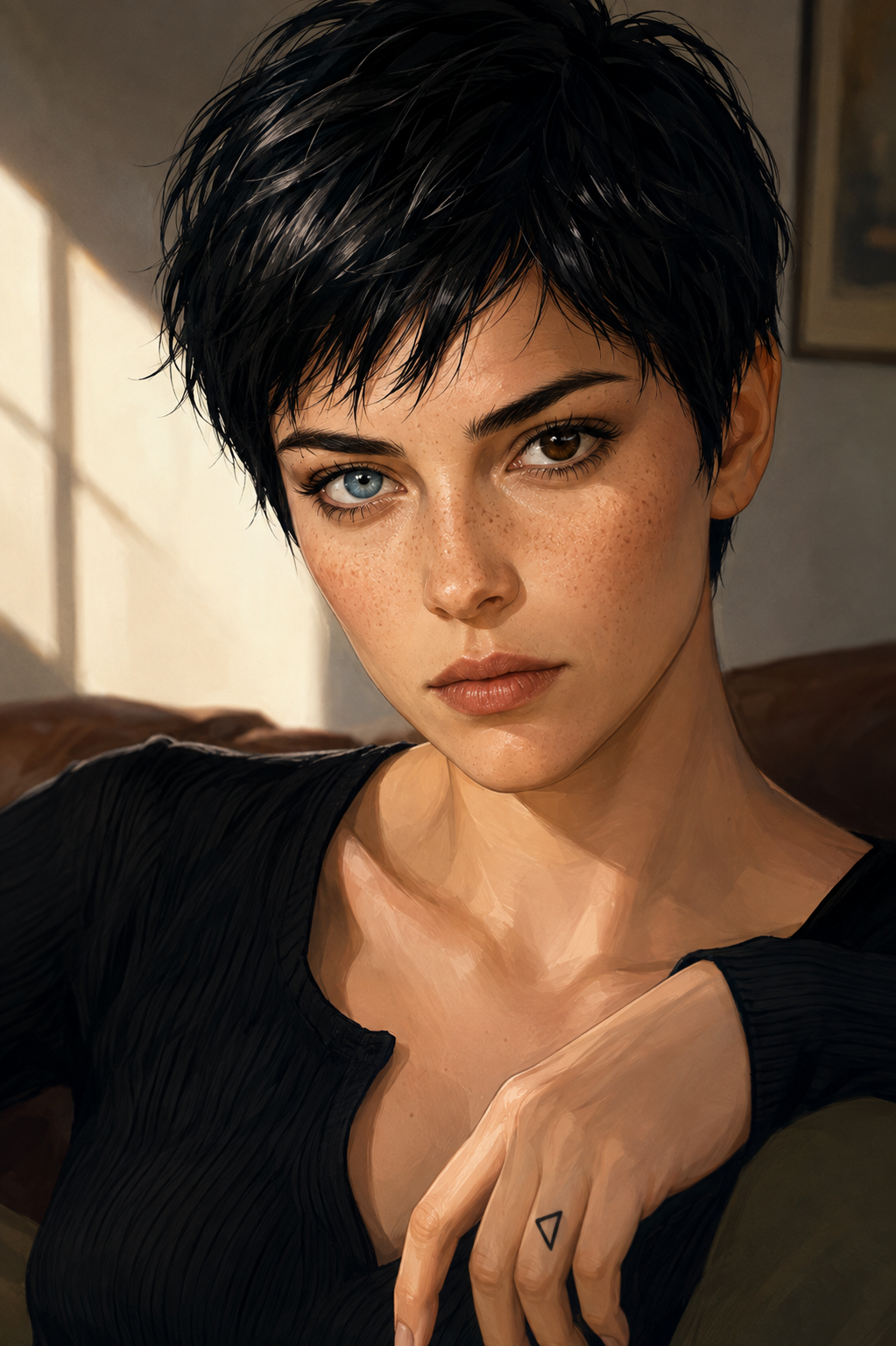
The original Charlie seemingly disappears or is overwritten; the new reality contains “Charlotte,” who claims she hasn’t spoken to Eve/Emma in years, helping cement the rewritten version of Eve’s life.
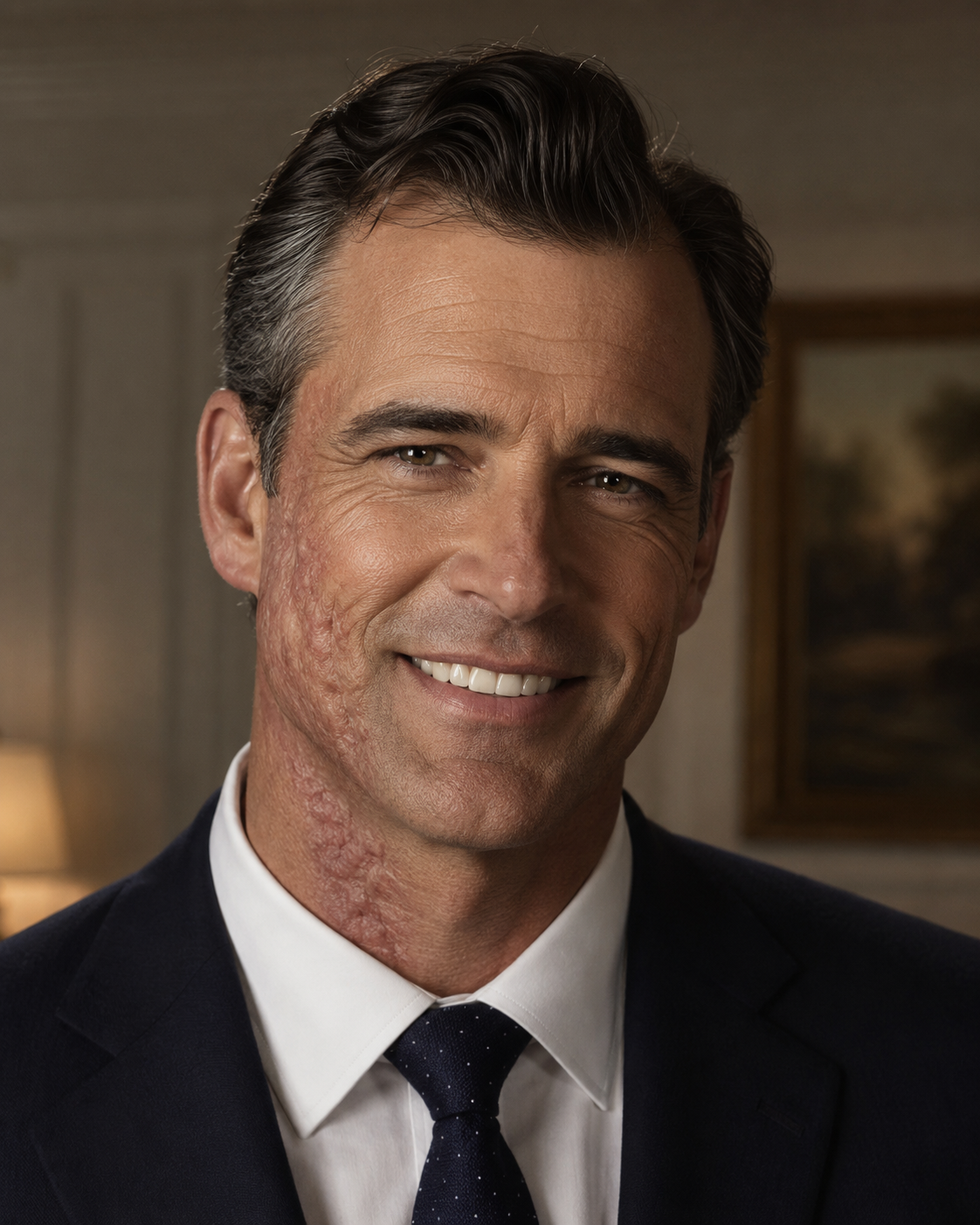
Eve smashes his face and jaw with a hammer, but he survives and later receives dental implants. Three years later, he visits Eve in the asylum posing as her forgiving brother, while the rest of the world accepts his version of events.
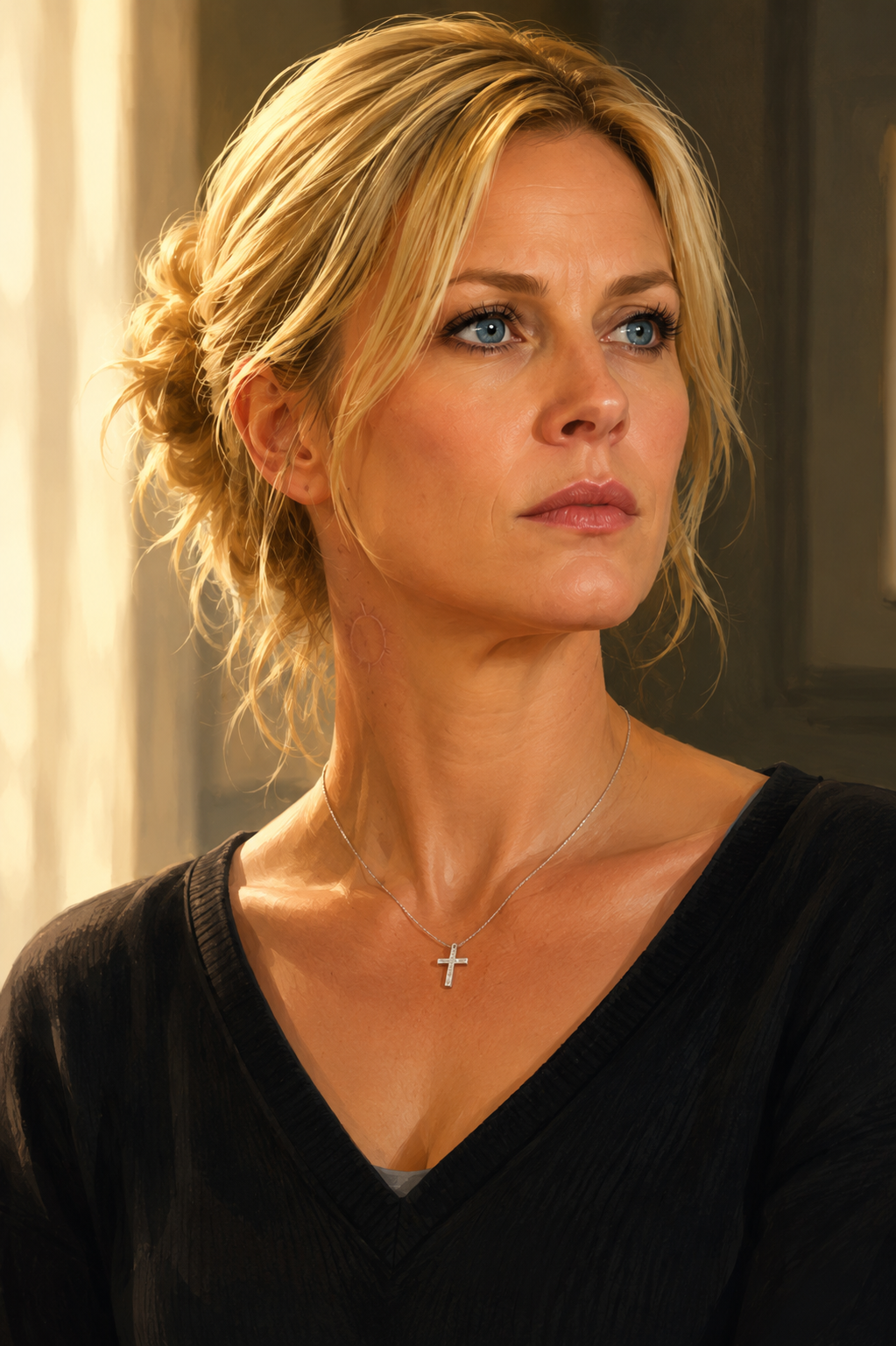
Stabs Eve in the thigh with a steak knife, after which Eve drives a corkscrew into Paige’s throat and kills her.

After forcing Eve into the hide-and-seek game that triggers the memory transfer, Alison appears alive, healthy, and transformed at the forest’s edge—apparently freed while Eve takes her place as the trapped/erased woman.
🔷 Supporting Characters
Survives the bloodbath and watches with profound dread from a bedroom doorway as police take Eve away.
Survives the incident, with his injuries helping support the rewritten narrative that Eve/Emma was the unstable aggressor.
Survives the bloodbath and remains part of the reality in which Eve is recast as Emma Faust.
Ultimately vouches for Thomas’s version of events and appears at the crime scene beside her supposedly dead husband Michael, proving that her history has also somehow changed.
Eve eventually encounters an apparently physical version of Mo in the basement’s nightmare hospital hallway, frantically banging his cymbals until she switches him off.
Ultimately helps establish the case that Eve is actually Emma Faust and oversees the process that results in her commitment to Greenwood Asylum.
After reality changes, he remains part of the official history in which Thomas—not Eve—has occupied the house for years.
Authorities later dismiss him as a “nut” and claim his cabin burned down years ago, leaving it unclear whether Eve met a survivor, ghost, displaced victim, or another artifact of altered reality.
When police contact them, they claim they are childless and have never heard of Eve Palmer, effectively erasing even Eve’s family history.
Despite appearing to have been dead or gone earlier, Michael is suddenly alive at the end, standing beside Heather as Eve is arrested, another sign that reality has been rewritten.
🕳️ Potential Plot Holes
The house is consistently identified as 3709 Heritage Lane, but during the final confrontation, Thomas gives the ambulance dispatcher the address 3710 Heritage Lane. The reality-warping nature of the house makes the change easy to interpret as intentional, but the novel never explicitly establishes that crossing into another reality changes the house’s street address, leaving the unexplained one-number shift as a possible Easter egg.
By the end, records, photographs, and even Eve’s own parents support the rewritten reality in which Eve Palmer never existed and she is supposedly Emma Faust. Yet the locket Thomas returns to her still contains a photograph of Eve from her original life. If the reality shift can rewrite every other physical record of Eve’s identity, it is unclear why this particular photograph remains unchanged. The locket may have special properties, but the novel never establishes rules explaining why it is immune to the same rewriting that affects everything else.
📚 Book Club Q&A's
⭐ Final Rating & Thoughts
We Used to Live Here is the kind of horror novel that makes you question absolutely everything—and then refuses to give you enough answers to stop questioning it. I loved the unsettling atmosphere, the creeping sense that something was fundamentally wrong, and the way Marcus Kliewer turns an ordinary house into something genuinely sinister.
The mystery was easily my favorite part. There are so many strange details, hidden clues, and moments that made me want to go back and see what I missed. It’s exactly the kind of book that practically demands theories and discussion after you finish.
That said, the ambiguity was also what kept this from being a five-star read for me. I enjoy a good mind-bender, but eventually I wanted a few more concrete answers. There’s a fine line between intriguingly mysterious and frustratingly confusing, and this occasionally crossed it.
Still, I was completely hooked. It’s creepy, clever, bizarre, and far more ambitious than the typical haunted-house story. Four stars for making me desperately want answers I’m still not entirely sure exist.
✨ Adaptation description
We Used to Live Here — Netflix Film Adaptation
Marcus Kliewer’s We Used to Live Here is being developed as a Netflix feature film. Netflix acquired the screen rights in 2021, when the story was still best known as Kliewer’s viral Reddit/NoSleep work—several years before the expanded novel was published in 2024. Blake Lively was announced to star and produce, with Matt Reeves’ 6th & Idaho and Ground Control Entertainment also involved in producing the project.
The adaptation has had a notably long development period. As of August 2026, there is still no announced director, filming date, or release date. IMDb currently classifies the film simply as “In Development.” (IMDb)
There is at least one useful recent update: in May 2026, Kliewer himself confirmed that Netflix still owns the film rights, saying he would be “more than happy to see a movie one day.” That suggests the rights have not reverted or moved elsewhere, although his wording also indicates that production is not imminent. (Reddit)
Production Details
- Title: We Used to Live Here
- Based on: Marcus Kliewer’s original Reddit story, subsequently expanded into the 2024 novel
- Format: Feature film
- Studio/Distributor: Netflix
- Announced Star: Blake Lively as the female lead
- Producer: Blake Lively through B for Effort
- Additional Producers: Matt Reeves’ 6th & Idaho and Ground Control Entertainment
- Status: In development
- Release Date: TBA (IMDb)
✨ Books Like We Used to Live Here (2024)
See an error on this page?