
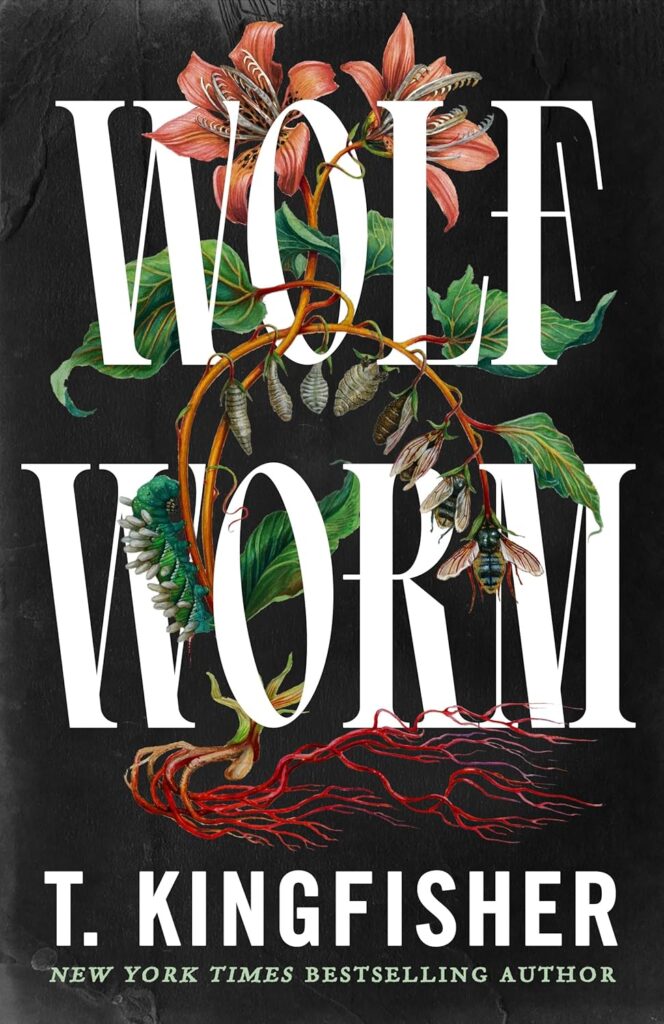
Wolf Worm (2026)
Select Sections to Print
×Book Details
Wolf Worm (2026)
Jump to Section
⚠️ Trigger Warnings
- Body horror
- Parasitic infestation
- Botflies / wolf worms
- Screwworm infestation
- Parasites burrowing into living flesh
- Graphic descriptions of wounds
- Gore
- Blood
- Flesh and organ consumption
- Cannibalistic behavior
- Raw animal consumption
- Imprisonment
- Prolonged captivity
- Torture
- Restraint / manacling
- Nails driven through limbs
- Graphic violence
- Murder
- Gun violence
- Throat slitting / throat injuries
- Neck injuries
- Animal harm
- Animal death
- Animal disease
- Animal drowning
- Animal dissection
- Animal slaughter
- Disturbing childbirth
- Maternal death during childbirth
- Infant / newborn horror
- Pregnancy-related body horror
- Buried alive
- Premature burial
- Exhumation
- Invasive medical procedures
- Parasite extraction
- Medical procedures without anesthesia
- Claustrophobia
- Confinement in enclosed spaces
- Darkness
- Severe illness
- Malaria
- High fever and delirium
- Parental death
- Respiratory illness / death from illness
⏱️ 2-Minute Spoiler Summary
In 1885, impoverished scientific illustrator Sonia Wilson travels to rural North Carolina to work for entomologist Dr. Matthias Halder, whose specialty is parasitic insects. From the moment she arrives, the place feels wrong. Locals warn her about “blood thieves” that supposedly roam the woods, animals behave strangely, chickens disappear at night, and Halder sneaks into a mysterious locked building in the forest carrying live animals.
Sonia soon learns that Halder’s former illustrator was actually his wife, Louisa Halder, who disappeared after falling in love with a drifter named Saul Gregor. Halder supposedly shot Saul dead when the couple tried to escape together, but Sonia becomes increasingly suspicious after discovering that the locked building leads to an underground chamber.
When Halder leaves town, Sonia sneaks inside and finds something horrifying. A living man is nailed and chained to a wire-mesh table, while enormous masses of flesh beneath his body are infested with hundreds of parasitic botfly larvae known as “wolf worms.” The prisoner is Saul Gregor, very much alive.
After Sonia becomes ill from the shock, the fanatical Asa Phelps realizes she discovered the bunker and locks her inside it. Saul finally explains the truth. He belongs to a non-human species that survives by consuming blood and flesh and possesses extraordinary healing abilities. Halder discovered this after shooting him. Instead of killing Saul, Halder imprisoned him and has spent more than a year using his regenerating body as a permanent host for parasitic insects.
Even worse, the parasites have begun adapting. They can influence nearby infected animals, driving squirrels, rabbits, and other creatures toward Saul so he can eat them and remain alive, ensuring the parasites’ own food source survives.
Phelps eventually enters the bunker armed with a gun, but Sonia realizes he has also been infected with a wolf worm near his brain. She strikes him with an enamel pan, rupturing the parasite’s warble. Phelps collapses onto Saul, who tears into his throat and feeds on him. The blood restores Saul’s strength, and Sonia removes the nails pinning him down so he can finally escape.
Their freedom is short-lived because Dr. Halder unexpectedly returns. He insists that Saul’s species is dangerous and that his horrific experiments are justified by science. Halder shoots Sonia in the shoulder, but Saul attacks him and bites his wrist, paralyzing him. Sonia takes Halder’s gun but refuses to save him. Saul kills Halder by ripping out his throat.
Rose and Jackson Kent help Sonia and Saul cover up the deaths, telling authorities that Halder and Phelps were killed by a wild animal. They destroy and bury the underground laboratory.
Three weeks later, Louisa returns after Ma Kersey manages to contact her, and she and Saul are finally reunited. Sonia and Louisa salvage the legitimate scientific work they produced for Halder and give it to Dr. Ainsley, who publishes the research while crediting both women as the primary illustrators and relegating Halder to little more than a footnote.
Louisa and Saul marry, Rose and Jackson move into a home of their own, and Sonia remains at the estate. She continues working as an illustrator and begins documenting Ma Kersey’s herbal remedies. Sonia has finally found financial security and a place to belong—but after everything she has witnessed, she never completely stops watching the woods.
📖 Full Spoiler Summary
Sonia Arrives at the Halder Estate
In the spring of 1885, Sonia Wilson arrives in rural Chatham County, North Carolina, with little more than a change of clothes and her painting supplies. Thirty years old and nearly penniless after her father’s death, Sonia has also left her job teaching art at a girls’ school in Wilmington. Her best chance at supporting herself is a new position as scientific illustrator for entomologist Dr. Matthias Halder.
Halder doesn’t exactly make a promising first impression—he forgets to send anyone to collect her.
Instead, Sonia gets a ride from Asa Phelps, a gaunt, intensely religious local farmer who spends their long wagon journey warning her that the Devil walks the surrounding woods. Things aren’t much more reassuring when she finally reaches Halder’s large, neglected estate.
There she meets Rose Kent, Halder’s formidable housekeeper, who immediately makes one thing clear: Sonia shouldn’t harbor any romantic notions about her employer. Halder isn’t looking for a wife, and according to Rose, he’s “mean as an old snake.” Rose’s husband, Jackson Kent, works around the estate as a handyman and gardener, while a nervous young maid named Sally warns Sonia about something considerably stranger: creatures called “blood thieves” that supposedly roam the woods at night and drain their victims.
Halder himself is a cold, unpleasant scientist obsessed with flesh-eating and parasitic insects. He hires Sonia to illustrate specimens for his upcoming monograph, particularly botflies and screwworms. Sonia is impressed by the beautiful reference paintings left by her unnamed predecessor, whose clothes, books, and supplies are still sitting in the studio where Sonia now lives.
She doesn’t yet know why the previous illustrator disappeared.
Wolf Worms and Blood Thieves
Sonia throws herself into her work. After capturing a large botfly she jokingly names Rex, she learns more about the parasites Halder studies. Their larvae, known locally as “wolf worms,” grow beneath an animal’s skin, while screwworms consume living flesh.
At the same time, Jackson tells her about the darker history of the surrounding woods. Years earlier, animals and people were supposedly found dead in trees, drained of blood. Then, three years before Sonia’s arrival, a vigilante group that included Jackson, Phelps, and Halder hunted down a strange young man and woman they believed were blood thieves. The mob hanged them, drove stakes through their bodies, and buried them.
The stories would be easy for Sonia to dismiss if increasingly bizarre things weren’t happening around the estate.
An unhealthy-looking raccoon appears near her balcony and stares at her with disturbing intensity. Chickens disappear from Rose’s coop without leaving blood or feathers behind. Sonia also notices lantern light moving through the woods at night.
Following it leads her to a padlocked, windowless building hidden among the trees. Phelps claims it’s merely a gunpowder shed, but Sonia quickly realizes something is wrong. When she stomps near it during another visit, a horrible rasping scream comes from beneath the ground.
Then she sees Halder steal a live chicken from Rose’s coop and carry it inside.
Sonia follows and discovers that the mysterious building conceals stairs descending underground. She hears Halder speaking to someone below.
Someone is living down there.
The Secret of Louisa Halder
Before Sonia can uncover the truth, another horrifying incident gives Halder an unexpected scientific breakthrough.
A possum appears at Sonia’s balcony door in the middle of the night. Its head is covered in swollen growths, and instead of behaving like a normal frightened animal, it deliberately manipulates the doorknob and repeatedly throws itself against the glass trying to get inside.
The animal is dead by morning. Halder dissects it and discovers that one of its wolf worms has burrowed through its skull and reached its brain, apparently altering its behavior. Ecstatic over the discovery, he takes the specimen to Raleigh to show other scientists.
His absence gives Sonia an opportunity to investigate another mystery.
Inside a trunk in her room, she finds sketchbooks signed by Louisa Halder. Jackson reluctantly tells her the truth: Louisa wasn’t merely Sonia’s predecessor. She was Halder’s wife.
Louisa had fallen in love with a local drifter named Saul Gregor. About a year earlier, the two attempted to run away together, but Halder caught them and shot Saul. Everyone believed Saul died while Louisa escaped the county.
Sonia also visits Ma Hezekiah Kersey, an elderly Lumbee midwife who knows the history behind the blood-thief stories. Years ago, Ma Kersey delivered twins after an impossibly short three-month pregnancy. The babies had feline-like teeth and strange translucent eyelids, and their mother died after the birth. The children grew unnaturally quickly and were eventually chained in a shed by their grandfather.
They were the pair killed by the vigilante mob.
But they apparently weren’t easy to kill. When their bodies were later dug up, the female had been attempting to claw her way out of the grave and had eaten red clay while trapped underground. The community ultimately burned both bodies.
Suddenly, the legends surrounding Sonia don’t seem quite so ridiculous.
Sonia Finds Saul Beneath the Woods
While Halder remains in Raleigh, Phelps accidentally leaves the supposed gunpowder shed improperly locked. Sonia takes advantage of the mistake and enters.
What she finds beneath it is worse than anything she imagined.
In a flooded underground chamber, a man lies spread-eagled across a wire-mesh table. Iron manacles hold his wrists and ankles, while enormous nails have been driven through his limbs into the wooden frame. Beneath him hang grotesque masses of living flesh crawling with hundreds of fat botfly larvae.
Then the apparently dead man opens his eyes and speaks.
Sonia flees in terror, leaving her candle behind. The experience sends her into a severe fever that leaves her delirious for days while Rose and Ma Kersey care for her.
Once Sonia recovers, Phelps confronts her in the woods holding the candle she dropped. He knows she discovered the prisoner. Terrified that the “Devil” will come for him if the secret escapes, Phelps overpowers Sonia and locks her inside the underground chamber.
Now Sonia has no choice but to face the prisoner.
He is Saul Gregor.
Halder never killed him.
Halder’s Horrifying Experiment
Saul explains that he isn’t human. He belongs to an ancient humanoid species that survives by feeding on blood and flesh and possesses extraordinary regenerative abilities. When Halder shot him during his attempted escape with Louisa, the scientist discovered that Saul could heal from injuries that should have killed him.
Halder saw an opportunity.
For more than a year, he has kept Saul imprisoned beneath the woods, using his regenerating body as a living laboratory. Saul can survive wounds and infections that would kill an ordinary human, making him the perfect host for Halder’s screwworms and wolf worms. The horrible masses hanging beneath Saul are the result of repeated parasitic infestation and regeneration.
But something unexpected has happened to the parasites.
They have adapted.
The wolf worms appear capable of influencing the brains of infected animals. Instead of simply consuming their host, they drive nearby rodents and other creatures toward Saul. The animals essentially sacrifice themselves so Saul can eat them and stay alive, which in turn keeps the parasites’ own host alive.
That explains the strange raccoon, the crazed possum, and the unnatural behavior Sonia has been witnessing.
Desperate to escape, Sonia uses an enamel pan to dig at the clay around one of the chamber’s ceiling beams.
Before she can break through, Phelps returns with a lantern and gun.
Sonia Frees Saul
Phelps is ranting about devils and blood thieves, but Sonia notices something horrifying: he has a wolf worm near his brain stem.
The parasite is influencing him too.
As Phelps moves toward Saul, Sonia swings the enamel pan and strikes him in the back of the head, rupturing the swollen warble. Phelps collapses across Saul’s table.
Saul immediately tears into his throat.
After more than a year of starvation and torture, the blood and flesh restore Saul’s strength. Sonia uses rusty forceps to pull the massive nails from his limbs, and the newly revitalized Saul breaks free from the rotting wooden restraints.
They finally emerge from the bunker—only to find Dr. Halder waiting for them.
Halder has returned unexpectedly from Raleigh.
Holding them at gunpoint, he doesn’t deny what he’s done. Instead, he argues that Saul’s species is itself a biological parasite and that studying and eventually destroying such creatures justifies his experiments.
Then he shoots Sonia, grazing and splintering her shoulder.
Saul attacks.
He bites Halder’s wrist, and the anesthetic venom in his bite leaves the scientist paralyzed. Sonia retrieves Halder’s dropped gun. She could intervene.
She doesn’t.
After everything Halder has done, Sonia simply steps aside and allows Saul to rip out his captor’s throat.
By the time Rose and Jackson arrive with weapons and a lantern, Halder is dead. Rose takes one look at his body and responds with satisfaction: “About damn time.”
Louisa Comes Home
Sonia, Saul, Rose, and Jackson agree on a simple explanation for the authorities: Halder and Phelps were attacked and killed by an unknown wild animal.
Then they erase the worst evidence of Halder’s crimes. Jackson and Saul treat the underground chamber with Paris Green insecticide before collapsing the structure and burying the infested laboratory forever.
But Saul is still waiting for the person he endured all of this for.
With help from Ma Kersey and a chain of Lumbee telegrams, word finally reaches Louisa. Three weeks later, she returns to the estate.
She and Saul are reunited after more than a year apart.
Sonia and Louisa quickly discover how much they have in common. Both are talented scientific illustrators. Both devoted enormous amounts of work to Halder’s research. And neither wants their work to disappear simply because the man behind it was monstrous.
They turn Halder’s legitimate research and completed illustrations over to an ambitious young entomologist, Dr. Ainsley. He eventually publishes Observations On the Habits And Developmental Stages Of Parasitic Insects, giving Sonia Wilson and Louisa Gregor prominent credit as its illustrators.
Halder, meanwhile, is reduced to little more than a footnote.
Louisa and Saul marry and begin their life together at last. Rose and Jackson leave the estate and purchase a nearby home, finally freeing themselves from the place and its history.
Sonia stays.
She settles into Halder’s former rooms and continues working as a scientific illustrator, eventually beginning another project documenting Ma Kersey’s herbal remedies. After arriving in Chatham County penniless and uncertain of her future, Sonia has unexpectedly found financial security, meaningful work, and people she considers family.
But what happened beneath the woods never entirely leaves her.
Sonia now knows that blood thieves are real. She knows parasites can influence the creatures they infect. And she knows exactly what supposedly respectable human beings like Halder are capable of doing in the name of science.
So even as life at the estate becomes peaceful, Sonia keeps watching the woods.
🔚 Ending Explained
How Wolf Worm Ends
The climax of Wolf Worm brings Sonia Wilson beneath the Halder estate, into the hidden bunker under the so-called gunpowder shed. There she discovers the horrifying truth about Saul Gregor, Louisa Halder’s supposedly dead lover. Saul has actually been imprisoned by Dr. Matthias Halder for more than a year, shackled spread-eagled to a wire-mesh table with heavy iron nails driven through his limbs.
Halder has discovered that Saul possesses a supernatural ability to recover rapidly from otherwise fatal injuries. Rather than seeing this as something miraculous—or even recognizing Saul as a person—Halder has turned him into a living laboratory. He repeatedly uses Saul’s regenerating body to cultivate and harvest screwworms and parasitic botflies, the “wolf worms” at the center of his research.
Even more disturbing, the mutant botflies have begun influencing other animals. Local rodents are compelled to crawl down into Saul’s cell, essentially sacrificing themselves so that he can eat them raw and remain alive. The parasites are no longer merely living inside their hosts; they are manipulating the surrounding ecosystem to preserve the host they depend upon.
Sonia Frees Saul
While Sonia is investigating the bunker, Asa Phelps traps her inside. But Phelps has become a victim of the very horror surrounding the estate: a botfly larva has burrowed dangerously close to his brainstem.
Under the parasite’s influence, Phelps moves toward Saul. Sonia grabs a heavy enamel pan and strikes Phelps in the back of the head, rupturing the larva’s warble. Phelps drops his pistol and collapses across Saul’s table.
Starving and desperately weakened, Saul attacks him, tearing into Phelps’s throat and consuming his blood and flesh. The feeding allows Saul’s body to begin regenerating.
Sonia then uses rusted forceps to pull the enormous iron nails from Saul’s limbs. Once freed enough to move, Saul destroys the wooden frame holding him and escapes his prison.
Halder’s Death
Their escape is interrupted when Dr. Halder unexpectedly returns from Raleigh and catches Sonia and Saul at gunpoint.
Halder fires, and a wooden splinter grazes Sonia’s shoulder. Saul attacks him, biting Halder on the wrist. Saul’s bite contains an anesthetic venom that leaves Halder paralyzed.
Halder tries to justify what he has done in the name of scientific discovery. Sonia, however, no longer accepts the idea that his intellectual ambitions excuse his cruelty.
She steps aside.
Saul tears out Halder’s throat.
When Rose and Jackson Kent arrive with a shotgun and see Halder’s body, Rose’s reaction perfectly captures the grim catharsis of the moment:
“About damn time.”
The Cover-Up
Sonia, Saul, Rose, and Jackson understand that the truth would almost certainly create more danger than justice. They therefore invent a story for the county sheriff: Halder and Phelps were killed by a rabid wild animal roaming the pine woods.
Jackson and Saul then destroy the physical evidence of Halder’s experiments. They treat the bunker with Paris Green insecticide to kill the remaining parasites and pull down its supporting timbers. The underground chamber collapses and eventually fills with water.
Three weeks later, Louisa Gregor, formerly Louisa Halder, returns after receiving word through Ma Hezekiah Kersey’s Lumbee telegram network.
She discovers that Saul is alive.
After believing him dead for more than a year, Louisa and Saul are finally reunited.
There is one final reversal of Halder’s legacy. Sonia and Louisa refuse to allow the scientific work they helped create to disappear with him. They collaborate with the young entomologist Dr. Ainsley, who publishes the completed Observations On the Habits And Developmental Stages Of Parasitic Insects.
This time, Sonia Wilson and Louisa Gregor receive proper credit as the primary illustrators.
Halder—the man who exploited their labor and treated other people as raw material for his ambitions—is reduced to little more than a footnote.
What the Ending Means
The ending ultimately turns the novel’s central question of who the real monster is completely on its head.
Saul looks monstrous. He has concealed predatory teeth, venom, extraordinary regenerative abilities, and a biological need that allows him to consume blood and flesh. Yet Saul repeatedly demonstrates that possessing predatory instincts does not require surrendering to them. He can choose restraint.
Halder makes the opposite choice.
He is educated, respected, civilized, and supposedly devoted to science. Yet he deliberately tortures another human being for more than a year because Saul’s suffering is useful to him.
That distinction is crucial. Nature can be horrifying without being evil. Evil requires choice.
The parasites simply survive according to their biology. Saul possesses dangerous instincts but consciously limits them. Halder and Phelps, meanwhile, repeatedly choose cruelty while convincing themselves that their actions are justified.
The Wolf Worm as a Symbol
The parasites become a fitting metaphor for exploitation.
A parasite survives by consuming another living thing without regard for what happens to its host. Halder behaves in essentially the same way. He consumes Saul’s body, Louisa’s talent, and Sonia’s labor in pursuit of his own reputation.
That is why Halder’s eventual fate is so appropriate: the scientist obsessed with studying parasitic behavior has unknowingly become one of the novel’s most perfect examples of it.
Sonia Finally Stops Being an Observer
Sonia’s most important moment isn’t physically killing Halder herself. It is choosing not to save him.
Throughout much of the novel, her instinct is to observe, document, survive, and avoid becoming involved in other people’s conflicts. That detachment resembles the work of a scientific illustrator: look carefully, record accurately, and remain outside the subject.
The bunker makes neutrality impossible.
By freeing Saul and allowing him to kill Halder, Sonia accepts that sometimes refusing to intervene is itself a moral decision. She stops merely documenting cruelty and takes responsibility for opposing it.
Her transformation is therefore not into a conventional hero. She remains pragmatic, skeptical, and uncomfortable with violence. What changes is her willingness to act when observation is no longer enough.
Why the Monograph Matters
The publication of Halder’s research might initially seem like a strange ending after everything his work caused. But destroying it would allow Halder to dominate the story even after his death.
Instead, Sonia and Louisa reclaim it.
Their names appear on the work they helped create, while Halder is pushed into the margins. It is an especially satisfying reversal because Louisa’s contributions had previously been hidden behind a man’s authority.
Halder wanted immortality through scientific achievement.
Instead, the women he exploited inherit the work.
He becomes the footnote.
The Epilogue
Eleven months later, the Halder estate has been transformed.
Louisa and Saul marry, finally receiving the life together that Halder tried to destroy. Rose and Jackson earn enough money to purchase a home nearby, giving them independence of their own.
Sonia remains at the estate and actually moves into Halder’s former rooms. She and Louisa continue producing illustrated scientific works together and begin documenting Ma Kersey’s traditional Lumbee herbal knowledge.
Even the site of Saul’s torture changes.
The destroyed bunker fills with rainwater and becomes a pond where frogs lay their eggs.
That image quietly completes the novel’s symbolism. A place once devoted to captivity, mutilation, infestation, and death becomes part of an ordinary cycle of life.
But the ending isn’t completely comforting.
Sonia cannot simply return to the person she was before Halder. She can no longer look at insects innocently, and even when riding a train she finds herself studying strangers and wondering what might be concealed beneath an apparently ordinary human exterior.
The horror has changed the way she sees the world.
The Ending, Explained
Wolf Worm ultimately ends on cautious hope rather than uncomplicated happiness.
Halder is dead. Saul is free. Louisa has reclaimed both her life and her work. Rose and Jackson gain independence. Sonia finds a home and a creative partnership. Even the bunker disappears beneath water and new life.
Yet Sonia has learned something she cannot unlearn: appearances tell us almost nothing about who is dangerous.
Saul looks like a monster but chooses humanity. Halder looks respectable but behaves monstrously. The parasites are grotesque, yet they operate according to instinct; human beings possess the far more frightening ability to rationalize cruelty.
That makes Sonia’s lingering suspicion at the end more than simple trauma. It reflects the knowledge she has gained. There really are predators hiding beneath ordinary surfaces—but they aren’t necessarily the creatures with strange teeth or unnatural bodies.
The ending therefore leaves Sonia with a harder task than defeating Halder: learning to continue participating in the world after discovering what the world is capable of.
She cannot unknow the horrors beneath the surface. She can only decide, as Saul does, what kind of creature she wants to be despite them.
👤 Characters & Fates
🔶 Main Characters
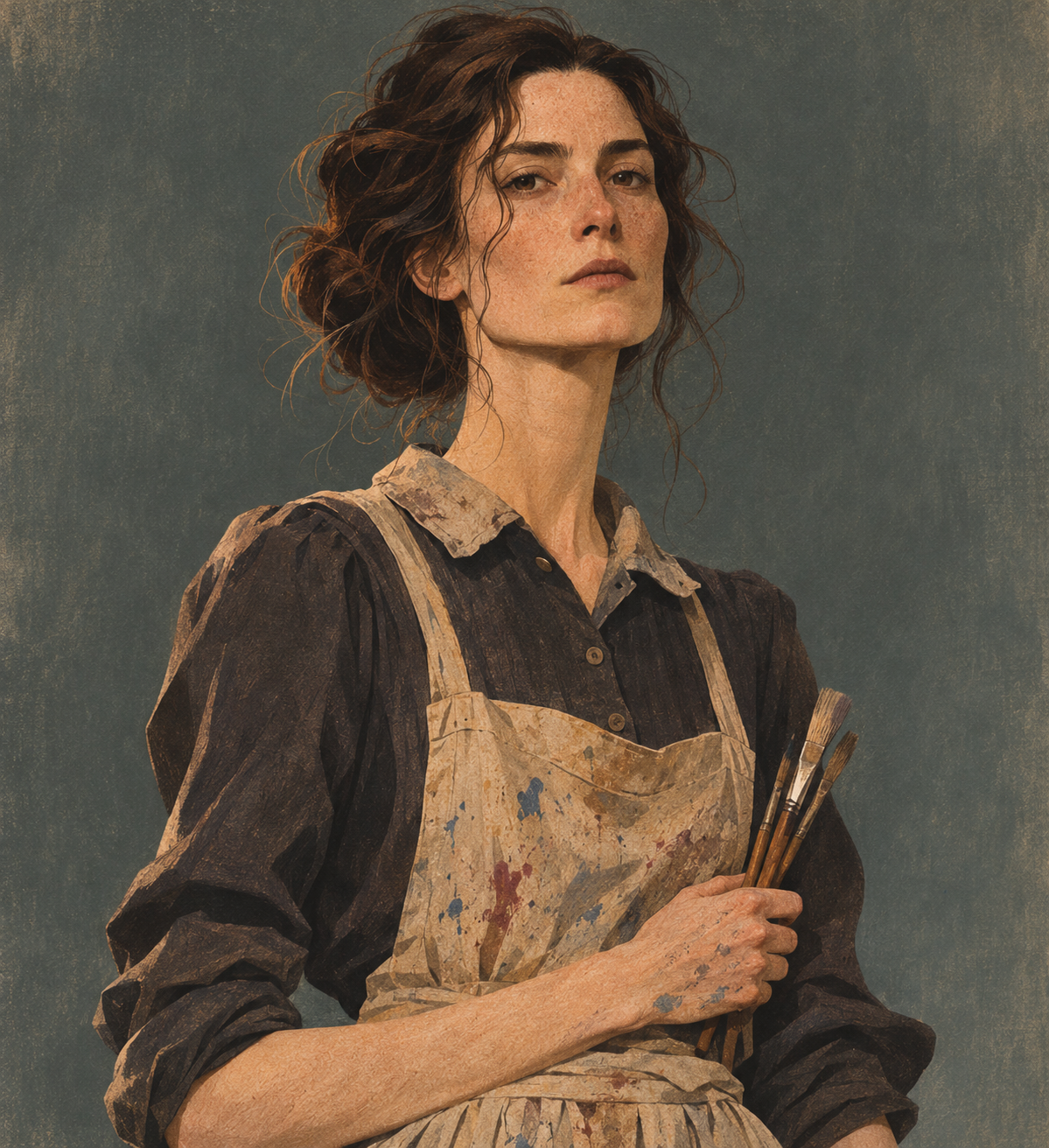
Survives malaria and Halder shooting her, frees Saul, and helps cover up Halder and Phelps’s deaths. She publishes the monograph with Louisa and Dr. Ainsley, moves permanently into Halder’s former rooms, and begins writing a book on Lumbee herbal remedies with Ma Kersey.

After returning to find Saul freed, Halder shoots Sonia in the shoulder before Saul paralyzes him with a venomous bite and rips out his throat. His academic legacy is effectively erased, with his research published by others and Halder reduced to a footnote.

Kills and feeds on Phelps to regain his strength, then kills Halder by tearing out his throat. He reunites with Louisa, marries her, lives peacefully at the estate, and controls his hunger by hunting wild animals.

Ma Kersey locates her after Halder’s death, allowing her to return and discover Saul is alive. She marries Saul and reclaims her artistic work by publishing the monograph with Sonia and Dr. Ainsley.

Arrives after Halder’s death with a shotgun and declares, “About damn time,” then helps create the cover story for the sheriff. She and Jackson eventually buy their own home nearby.

Treats the underground cell with Paris Green, collapses the bunker, and helps conceal the truth about the deaths. He and Rose later leave the estate for a nearby home of their own.

A mutant botfly larva near his brainstem drives him into a frenzy; Sonia strikes him and bursts the warble, after which he collapses onto Saul. Saul tears out his throat and consumes his blood and flesh to regenerate.
🔷 Supporting Characters
Uses that network to find Louisa and bring her back to Saul. She later receives game from Saul and works with Sonia on a book documenting Lumbee herbal remedies.
Survives unharmed and returns to her family shortly after Halder’s death.
A vigilante mob shoots, hangs, stakes, and buries them, but the female begins digging herself out while eating clay. The horrified mob exhumes both twins and burns their bodies to ashes.
Survives everything completely unharmed and continues sleeping on Sonia’s bed and lounging around her studio.
Dies from ether in Sonia’s killing jar and becomes an illustration plate in the finished monograph.
Publishes Observations On the Habits And Developmental Stages Of Parasitic Insects, prominently crediting Sonia and Louisa while relegating Halder to a minor author’s-note footnote.
Replaces Sonia after she leaves for Chatham County, while Sonia ultimately chooses never to return.
Remains in Wilmington teaching French while Sonia builds an entirely new life in Chatham County.
The non-human twins kill her, leaving her in a tree with her throat torn out and her wrists bitten through.
Survives the story without incident and continues working at Siler Station.
🕳️ Potential Plot Holes
Halder secretly steals live chickens and carries them to the bunker to feed Saul, risking discovery when Rose notices her best laying hens disappearing and Jackson considers guarding the coop with a shotgun. Yet the mutant parasites have apparently developed the ability to manipulate nearby animals and lure them into the bunker, providing Saul with squirrels, rabbits, and other prey. The chickens may simply supplement an unreliable supply of wild animals or provide Saul with more substantial nourishment, but the novel never clearly explains why Halder continues taking such an unnecessary risk once the parasites begin attracting food themselves.
Phelps already possesses extreme religious beliefs and views Saul as something demonic, making many of his actions consistent with his established personality. But the botfly larva near his brainstem also appears capable of influencing his behavior, particularly when his body begins moving involuntarily toward Saul. The book never establishes exactly where Phelps’s own fanaticism ends and the parasite’s neurological control begins. This ambiguity is probably intentional, but it leaves the precise motivation behind some of his final actions unresolved.
📚 Book Club Q&A's
⭐ Final Rating & Thoughts
T. Kingfisher somehow made parasitic flies disgusting, terrifying, fascinating, and—against all odds—emotionally moving. Wolf Worm hit exactly the sweet spot I want from horror: genuinely creepy without relying on cheap scares, gruesome without feeling gratuitous, and populated by characters I actually cared about.
The body horror was wonderfully awful. Knowing that so much of the insect biology behind the story is rooted in reality made everything infinitely more disturbing, and I may never look at a botfly the same way again. But what pushed this into five-star territory for me was that the horror had substance behind it. The story explores scientific ethics, cruelty, abuse, survival, and what happens when curiosity exists without compassion.
I especially loved Sonia. She's practical and anxious rather than traditionally fearless, which made her bravery feel much more believable. The supporting characters also gave the story an unexpected warmth that balanced all the skin-crawling horror.
This was creepy, original, surprisingly tender, and incredibly difficult to put down. I came for the gothic nightmare and horrifying bugs; I stayed because Kingfisher somehow gave the nightmare a heart.
✨ Adaptation description
Screen Adaptation
As of November 2026, no film or television adaptation of T. Kingfisher’s Wolf Worm has been officially announced. There is currently no publicly reported studio, production company, director, screenwriter, cast, or release date attached to the novel.
Published by Tor Nightfire on March 24, 2026, Wolf Worm is a Southern Gothic horror novel set in North Carolina in 1899. It follows Sonia Wilson, a scientific illustrator who accepts a job working for the reclusive entomologist Dr. Matthias Halder and gradually discovers that his research into parasitic insects involves horrifying experiments on human flesh. The novel became an instant New York Times, USA Today, and Indie bestseller.
Despite the book’s success and its cinematic combination of historical Gothic horror, biological body horror, mystery, and supernatural elements, searches of current publishing and entertainment coverage do not reveal a publicly announced screen-rights acquisition or adaptation in development.
✨ Books Like Wolf Worm (2026)
See an error on this page?