
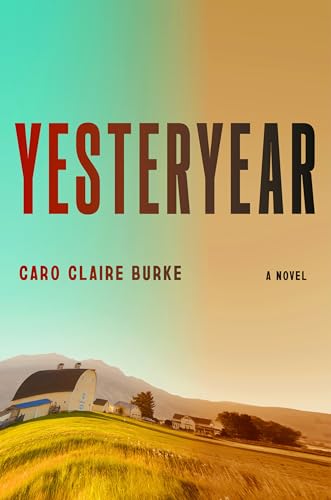
Yesteryear (2026)
Select Sections to Print
×Book Details
Yesteryear (2026)
Jump to Section
⚠️ Trigger Warnings
- Physical violence
- Domestic abuse
- Child abuse
- Child neglect
- Child exploitation
- Sexual assault
- Sexual coercion
- Graphic injury
- Drug use
- Forced medication
- Animal death
- Animal cruelty
- Racism
- Xenophobia
- Bigotry
- Hate speech
- Online harassment
- Traumatic childbirth
- Miscarriage
- Abortion discussion
- Pregnancy-related trauma
⏱️ 2-Minute Spoiler Summary
Natalie Heller marries into the powerful Mills political family and turns Yesteryear Ranch into a social media empire by pretending to live as a perfect 1850s tradwife. In reality, the entire lifestyle is staged with hidden nannies, employees, modern appliances, and carefully edited videos. When filmmaker Shannon uncovers the deception and begins a relationship with Natalie’s husband Caleb, Natalie attacks her. Shannon’s exposé destroys the ranch’s reputation, ruins Caleb’s father, Senator Doug Mills’s presidential campaign, and leaves Natalie facing criminal charges.
Instead of surrendering, Natalie and Caleb isolate themselves at the ranch for ten years, forcing their children to live as if it’s 1855. The older children eventually escape, while the younger ones—including Mary—grow up believing the outside world doesn’t exist. During the isolation, Natalie becomes addicted to prescription pills and gradually loses her grip on reality, often believing she truly lives in the nineteenth century.
The illusion finally ends when the oldest daughter, Clementine, returns with law enforcement and reveals the truth to her younger siblings. The children are rescued, Natalie is arrested and sentenced to 30 years in prison for aggravated child abuse, and years later Mary publishes a bestselling memoir, The Book of Mary, telling the real story of growing up inside her parents’ elaborate and abusive lie.
📖 Full Spoiler Summary
Building the Perfect Life
Natalie Heller has always believed she was meant for something bigger. Raised in Idaho in a deeply religious household, she’s ambitious, image-conscious, and convinced that God has a special purpose for her life. That belief only grows stronger after she marries Caleb Mills, the youngest son of Senator Doug Mills, a powerful political figure with presidential ambitions. Caleb is gentle, passive, and eager to please, making him the perfect husband for someone as controlling as Natalie.
Together they purchase an aging property that Natalie transforms into Yesteryear Ranch, a place designed to look as though a family has stepped straight out of the 1850s. It begins as a niche social media project but quickly explodes into a cultural phenomenon. Millions of followers—mostly frustrated women Natalie privately dismisses as “Angry Women”—become obsessed with her videos celebrating traditional motherhood, homemaking, faith, and pioneer values.
To viewers, Natalie appears to wake before sunrise, bake bread from scratch, grow every vegetable herself, sew every dress, educate every child by hand, and manage a thriving farm without modern conveniences. She becomes the face of the online “tradwife” movement.
None of it is true.
The beautiful videos are carefully staged performances. Hidden behind the scenes are generators, modern appliances, grocery deliveries, pesticides, and paid employees who quietly do the exhausting work before disappearing whenever the cameras begin rolling. Nanny Louise and Nanny Aimee shoulder much of the childcare while Natalie films content portraying herself as a tireless pioneer mother. Every post is another carefully manufactured illusion.
Natalie convinces herself that none of this is lying. She’s simply selling a dream.
Cracks Begin to Show
As Yesteryear Ranch grows into a multimillion-dollar business, Senator Doug Mills recognizes its political value. Natalie’s wholesome image becomes an extension of the Mills family brand, perfectly supporting Doug’s own presidential aspirations.
The pressure to maintain perfection becomes relentless.
Natalie demands complete control over everyone around her, especially Caleb. Although he initially supports the project, years of living under Natalie’s constant supervision slowly wear him down. He has little say in the business, the children, or even his own future.
Wanting to document the ranch professionally, Natalie hires Shannon, an outspoken film student whose politics couldn’t be more different from her own. Shannon is fascinated less by the romantic image Natalie presents than by everything happening off camera.
She notices the hidden employees.
She notices the chemicals used on supposedly natural crops.
She notices exhausted workers scrambling out of frame before filming starts.
Most importantly, she notices how frightened everyone seems of Natalie.
Rather than producing another flattering documentary, Shannon quietly begins recording the truth.
At the same time, Caleb finds himself increasingly drawn to Shannon. Unlike Natalie, Shannon listens to him instead of directing every aspect of his life. Their emotional connection grows until Caleb finally admits that he wants to leave his marriage.
For Natalie, this is an unforgivable betrayal.
Everything Falls Apart
When Natalie discovers Caleb’s feelings for Shannon, years of carefully controlled anger explode.
She attacks Shannon, wrapping her hands around her throat and strangling her in a fit of rage before others intervene. Shannon survives, but the assault changes everything.
Instead of remaining silent, Shannon fights back.
She files a lawsuit and finishes the documentary she’d secretly been making all along. The resulting prime-time exposé completely destroys the carefully crafted mythology surrounding Yesteryear Ranch.
Millions of viewers learn that the self-sufficient homestead is largely fake.
The hidden staff are revealed.
The pesticides are exposed.
The exploitation of employees becomes public.
Natalie’s violent assault is laid bare for everyone to see.
The scandal quickly expands beyond the ranch. Because Doug Mills has built much of his political campaign around family values and Natalie’s public image, the revelations devastate his presidential ambitions. The campaign collapses almost overnight.
Meanwhile, prosecutors begin investigating Natalie for fraud, child abuse, financial crimes, and assault.
For the first time in her life, Natalie cannot control the narrative.
Choosing Isolation
Rather than face public disgrace and criminal prosecution, Natalie and Caleb disappear.
They retreat permanently to Yesteryear Ranch with their children and sever nearly every connection to the outside world. What begins as hiding gradually transforms into something far stranger.
Instead of merely avoiding society, they decide to eliminate it entirely.
Cars are sold.
Phones disappear.
Electricity is abandoned.
Modern clothing is packed away.
The family commits to living exactly as if it were 1855.
At first the experiment feels temporary.
Then months become years.
Eventually an entire decade passes.
The older children—Clementine, Samuel, and Stetson—are old enough to remember the modern world. They understand that their parents are creating an elaborate fantasy, and as they mature, each eventually finds a way to escape the ranch.
The younger children know nothing else.
Mary, Maeve, Abel, and Noah grow up believing the nineteenth century is the only world that exists.
Their parents become the only history books they’ve ever known.
Natalie’s Mind Begins to Break
Isolation doesn’t bring Natalie peace.
Instead, it accelerates her psychological collapse.
She begins taking prescription medications originally belonging to Caleb’s late mother, Amelia Mills. The pills become known around the ranch simply as “tonics.” Mary regularly gives them to Natalie because they’re one of the few things that keep her manageable.
The drugs blur Natalie’s already fragile grip on reality.
Some mornings she wakes genuinely believing she’s living in 1855.
Other days she thinks cameras are still following her and that she’s secretly participating in another reality television show.
Sometimes she believes God has placed her inside an elaborate spiritual test.
Her memories no longer fit together. She drifts between different versions of her life, unable to determine which one is real.
Meanwhile, Caleb changes just as dramatically.
The once soft, agreeable young husband becomes hardened by years of isolation. Instead of comforting Natalie, he increasingly controls her through intimidation and violence. Whenever she questions their strange existence or attempts to leave, he forces her back into the carefully maintained illusion.
The marriage that once appeared perfect has become a prison for both of them.
Life Inside the Lie
Because Natalie is so frequently sedated or detached from reality, much of the responsibility for raising the younger children falls to Mary.
Still only a teenager herself, Mary cooks, teaches, comforts Maeve, watches over Abel and Noah, and keeps the household functioning. She effectively becomes their mother while Natalie drifts through hallucinations and Caleb focuses on survival.
Mary never questions the life she’s been given.
She believes neighboring pioneer families exist somewhere beyond the woods.
She believes grocery stores and cities are stories.
She believes the family’s hardships are simply part of normal life.
Only occasionally do strange inconsistencies appear.
Food sometimes arrives without anyone remembering how it was produced.
Supplies appear mysteriously.
Caleb disappears for long stretches without explanation.
Natalie notices these oddities but cannot make sense of them through the haze of medication.
Desperate to escape one day, she runs into the woods and steps into a steel animal trap. The brutal injury mangles her ankle and leaves her barely able to walk.
Even then, she keeps trying to find a way out.
The Hidden Cabin
During another escape attempt, Natalie discovers something she cannot explain.
Deep in the woods sits a hidden cabin occupied by people she assumes are neighboring pioneers.
Inside, however, she witnesses something impossible.
The men are opening modern grocery store packaging, removing labels from canned goods and boxed food, then repackaging everything so it appears homemade.
At first Natalie believes she’s hallucinating.
Then she recognizes the men.
They’re Samuel and Stetson.
Her own sons.
Now fully grown adults, they’ve secretly remained nearby for years, helping keep the younger children alive while preserving their parents’ illusion. Rather than abandoning the family entirely, they’ve been quietly supplying food and necessities while disguising every trace of the modern world.
The revelation shakes Natalie, but her damaged mind struggles to process it. She cannot reconcile the grown men before her with the little boys she remembers.
Before she can fully understand what she’s seen, she’s returned to the ranch.
The lie continues.
Clementine Comes Home
Everything changes when a modern vehicle suddenly arrives at the ranch.
Out steps Clementine.
Unlike her mother, Clementine has spent years living in the real world. She knows exactly what happened after the scandal and has been waiting for the right moment to come back.
Her arrival shatters the illusion almost immediately.
Mary is stunned to learn that Clementine isn’t a stranger but her older sister.
Even more shocking, the mysterious “neighbors” she’s believed lived nearby her entire life are actually Samuel and Stetson—her brothers.
There were never pioneer families.
There was never another settlement.
The entire world she’d known has been carefully manufactured by her parents.
Clementine patiently explains the truth.
After Shannon’s exposé destroyed Yesteryear Ranch and the Mills family’s political future, Natalie and Caleb hid from authorities by isolating themselves on the ranch. Their nineteenth-century lifestyle wasn’t authentic—it was simply an elaborate disguise that eventually became a shared delusion.
Doug Mills’s fortune had slowly disappeared over the years, making it impossible to continue protecting them forever. Once his money and influence were gone, there was nothing left preventing law enforcement from finally intervening.
Clementine has spent years coordinating with Samuel, Stetson, and the authorities to rescue the younger children.
The time has finally come.
The End of Yesteryear
Law enforcement arrives with warrants.
Mary, Maeve, Abel, and Noah are removed from the ranch and taken to safety in Santa Monica, where they can begin learning about a world they never knew existed.
For Mary especially, the transition is overwhelming.
Everything she believed about her childhood turns out to be false.
The ocean, cities, electricity, technology, schools, and ordinary modern life all feel impossibly foreign after spending her entire life inside an invented version of the nineteenth century.
Natalie and Caleb remain behind.
With the children finally gone, there’s no longer any reason to pretend.
For the first time in years, they speak honestly.
Neither ever truly loved the other anymore.
Years of resentment, manipulation, fear, and mutual dependence have hollowed out their marriage until nothing remains except blame. They admit they hate each other, recognizing that the fantasy they built together destroyed not only themselves but their entire family.
Shortly afterward, Natalie is arrested and finally forced to face the criminal charges she spent a decade avoiding.
Five Years Later
Five years pass.
Natalie is serving a thirty-year prison sentence for aggravated child abuse and related crimes stemming from the years of abuse, neglect, fraud, and isolation at Yesteryear Ranch.
Her interviewer is Reena Magliotti, a former college rival who has become a successful television news anchor. Reena has the opportunity to ask Natalie the questions the public has wanted answered for years.
Instead of focusing on the sensational details, Reena presents Natalie with something far more devastating.
A copy of The Book of Mary.
Written by Mary’s now-adult daughter, the memoir becomes a national bestseller. It tells the true story of growing up inside Yesteryear Ranch, where children were taught to fear the outside world and believe they were living in the 1850s. Mary recounts how she became a surrogate mother to her siblings, how she slowly realized everything around her was a lie, and how she and the others finally escaped the “wolves”—the name she uses for Natalie and Caleb—to reach the ocean and begin new lives.
Holding the book in her prison cell, Natalie is forced to confront the only version of her story she can no longer control.
The carefully crafted image she spent her entire life protecting has vanished forever, replaced by the testimony of the daughter who survived it.
🔚 Ending Explained
Ending Explained
The ending of Yesteryear reveals that there was never any time travel, alternate reality, or secret historical experiment. The shocking “pioneer” world Natalie believes she has entered is actually the result of ten years of self-imposed isolation, fueled by denial, manipulation, and her desperate need to preserve the fantasy she built.
For much of Part Two, Natalie—and the reader—are encouraged to believe something impossible has happened. Modern technology has vanished, hospitals are gone, and everyone appears to be living in the nineteenth century. The truth is far more disturbing: after the scandal surrounding Producer Shannon exposed the fraud behind Yesteryear Ranch, Natalie and Caleb withdrew from society instead of facing the consequences. Protected by Doug Mills’s money and influence, they disappeared onto the ranch and recreated the life Natalie had spent years selling online.
By the time Clementine arrives, that fantasy has completely collapsed. Natalie learns she is fifty years old, not thirty-two, and what she interpreted as a late-life pregnancy was actually the beginning of menopause. Entire years have disappeared from her memory, blurred by heavy medication, isolation, and the stories she kept telling herself. Rather than escaping reality, she slowly erased it.
The revelation about the children is equally devastating. Clementine, Samuel, and Stetson escaped years earlier after realizing their parents would never leave the ranch willingly. Meanwhile, Mary, Maeve, Abel, and Noah grew up believing the outside world no longer existed. They were taught that their older siblings had died, ensuring they would never question why no one came looking for them. Even the mysterious “neighbors” Natalie occasionally glimpsed were never strangers—they were Samuel and Stetson secretly delivering supplies to keep their younger siblings alive while avoiding direct contact with their parents.
Clementine’s arrival finally ends the illusion. She comes with a warrant to remove the younger children, explaining that Doug Mills’s money has run out and the family can no longer avoid prosecution. Yet she refuses to rescue Natalie herself. Her statement—“You’re the one who built this place, Mom. You don’t need anyone’s help to leave it.”—captures one of the novel’s central ideas. Natalie was never physically trapped. She constructed the prison herself and repeatedly chose fantasy over reality.
After the children leave, Natalie and Caleb finally admit what has been obvious for years: they hate each other. Their marriage survived only because they needed each other to maintain the illusion. Once the children are gone and the performance is over, there is nothing left to sustain either their relationship or their invented world.
The epilogue shows the lasting consequences of those choices. Five years later, Natalie is serving a thirty-year sentence for aggravated child abuse, while Caleb has also been held accountable. The ending offers no miraculous redemption or last-minute reconciliation. Instead, justice finally arrives after a decade of avoidance.
Mary’s memoir, The Book of Mary, provides the novel’s final emotional perspective. Throughout the story, Natalie casts herself as a devoted mother preserving traditional values. Mary’s account destroys that narrative. She describes her parents not as loving protectors or misunderstood pioneers, but as “wolves.” In contrast, Clementine becomes the family’s “angel” because she was the one willing to return and save the younger children, even after everything her parents had done.
The final image of Mary entering the highway for the first time is deeply symbolic. Throughout her childhood, roads represented the forbidden world beyond the ranch. Merging onto a highway becomes more than a simple car ride—it represents freedom, modernity, truth, and the future. While Natalie spent years trying to preserve an idealized version of the past, Mary embraces the unknown world ahead with hope instead of fear.
Ultimately, Yesteryear is less about tradwife culture or social media than it is about the danger of believing your own performance. Natalie begins by curating an idealized life for millions of followers, hiding the staff, technology, and compromises that make it possible. When that performance is threatened, she doesn’t abandon the lie—she commits to it completely, sacrificing her marriage, her children, and eventually her freedom. By the end, the people who truly survive are the children who escape the fantasy and choose reality, no matter how uncertain it is.
👤 Characters & Fates
🔶 Main Characters
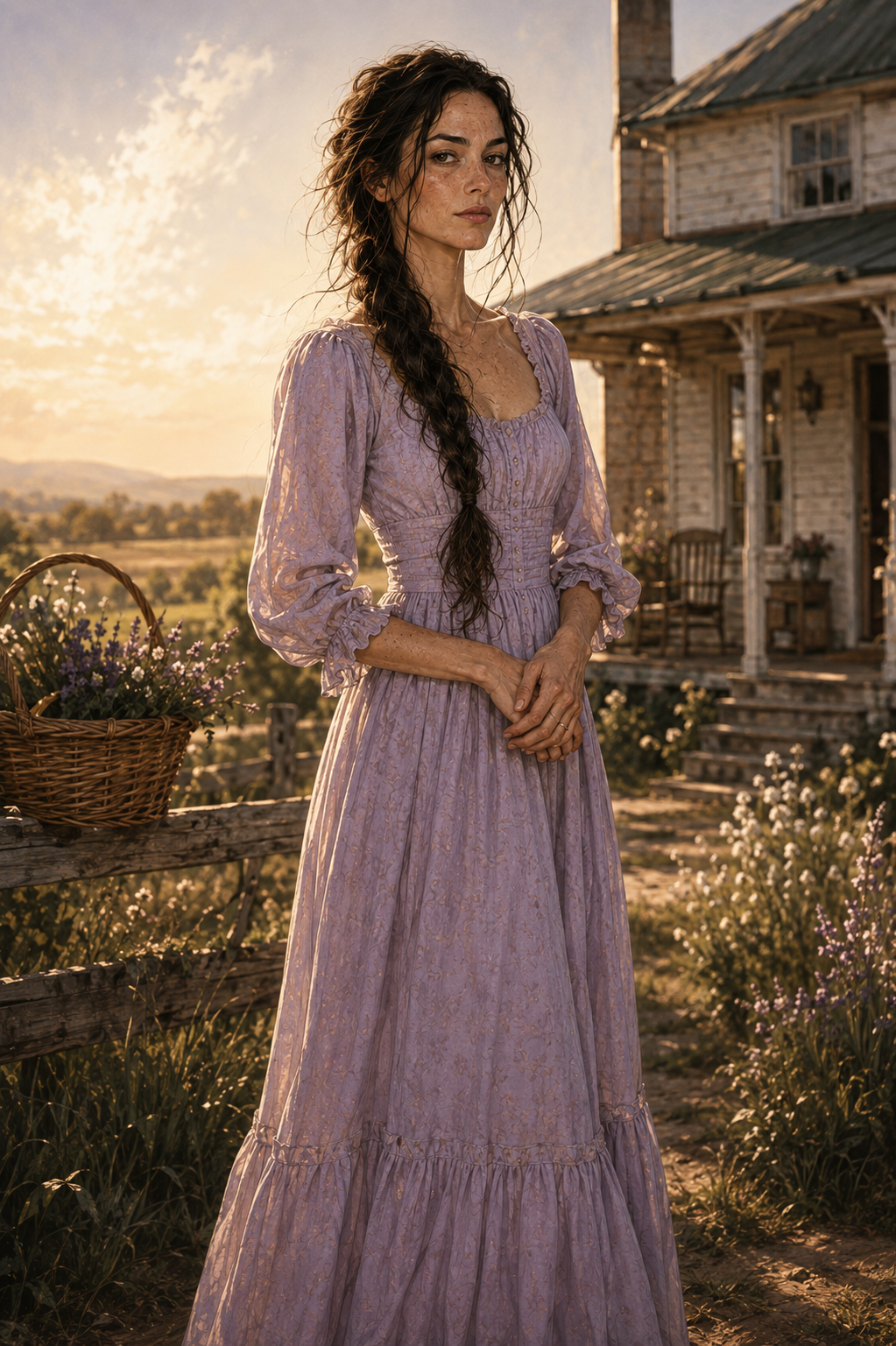
She is sentenced to thirty years in prison for aggravated child abuse. Five years after her children are rescued, she is interviewed in prison by her former rival, Reena.
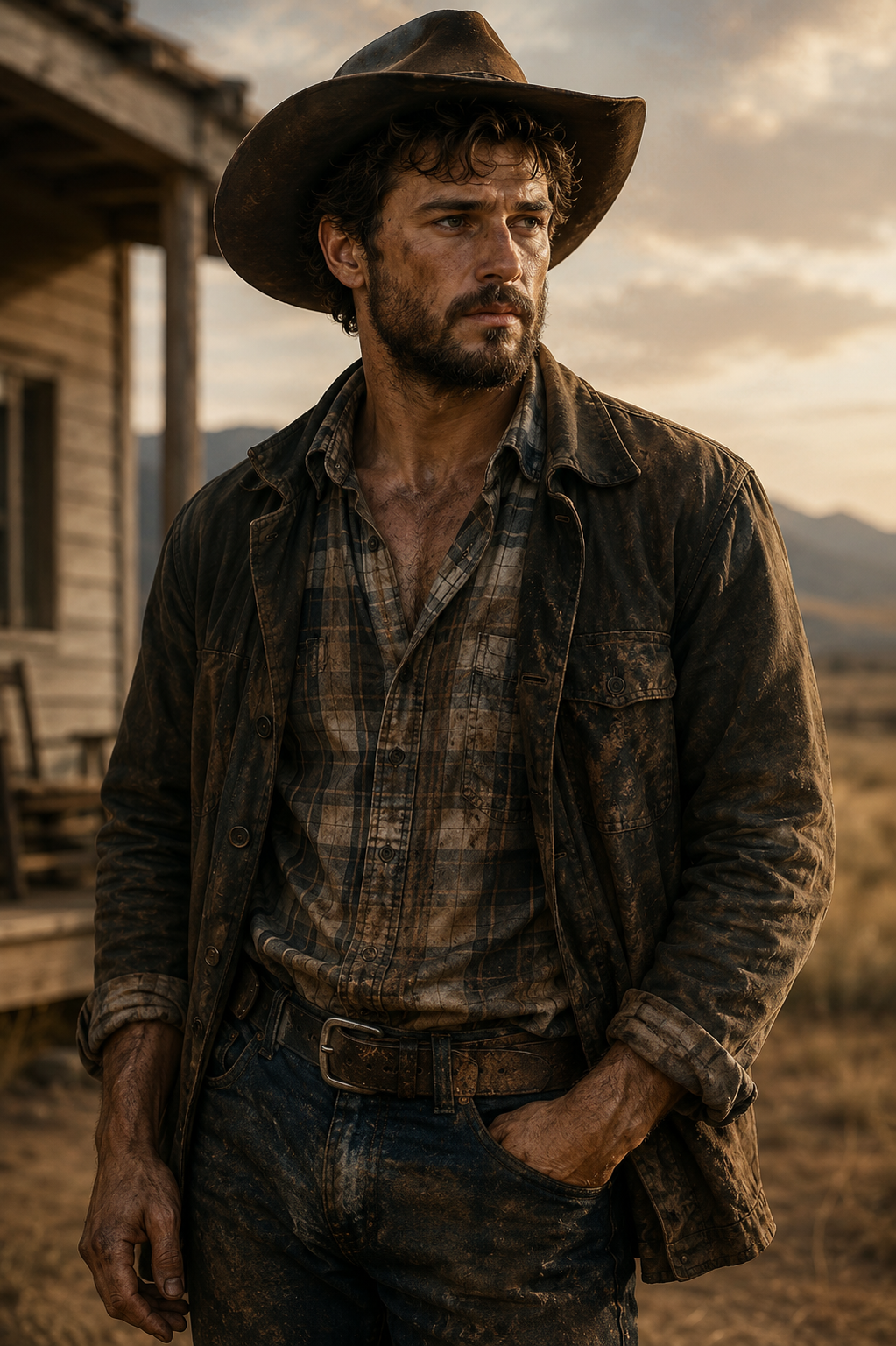
After the children are rescued, Caleb and Natalie openly admit they hate each other.

She settles in Santa Monica with her siblings and becomes an activist dedicated to fighting child exploitation on social media.
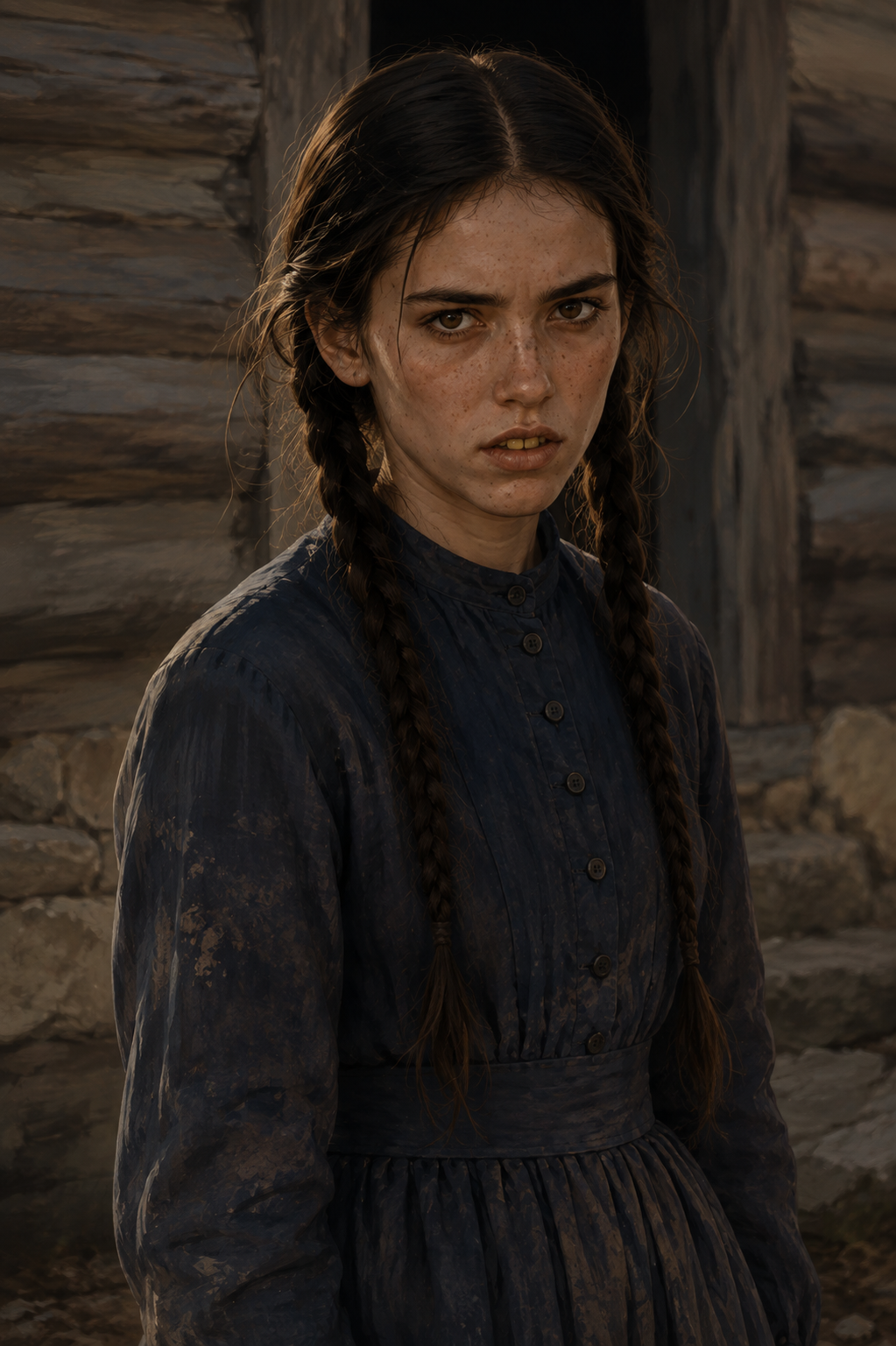
Mary is rescued by Clementine and begins a new life in Santa Monica with her siblings, where she learns to read and write as an adult.
🔷 Supporting Characters

After his presidential campaign fails, Doug cuts off both his financial support and contact with Natalie and Caleb, leaving them to face the consequences of their actions alone.
Shannon's exposé is a success, and she remains a trusted ally of Clementine, supporting her long after the family's abuse is brought to light.
As the Mills family's scandals spiral out of control, Amelia retreats from public life and fades into isolation alongside the collapse of her family's reputation.
After the rescue, Samuel and Stetson reunite with their siblings in Santa Monica, where they finally begin rebuilding their lives outside the ranch.
Maeve is rescued by Clementine along with her younger siblings and begins a new life with them in Santa Monica.
The brothers are rescued by Clementine along with the rest of their younger siblings and begin a new life together in Santa Monica.
Reena builds a successful career as a news anchor in Chicago and presents Natalie with Mary's bestselling memoir during their final interview.
Before Natalie disappears into isolation, Eliza confesses her own infidelities and angrily confronts her daughter's lack of genuine kindness, marking their final meaningful interaction.
Abigail becomes a nurse, finds a new partner, and provides the older siblings with a safe haven after they flee the ranch, helping them begin their lives outside the family's control.
They are later referenced in Mary's memoir as part of the unhealthy environment the children escaped. While their ultimate fates are not detailed, they likely became important witnesses during the child abuse investigation.
🕳️ Potential Plot Holes
Like many psychological thrillers, Yesteryear asks readers to accept a few leaps in logic. Most of them can be explained by Natalie’s drug-induced delusions, but a handful of questions remain even after the final reveal.
The biggest question is how the Heller Mills family managed to disappear for roughly a decade.
Natalie was one of the country's most recognizable influencers, Caleb was the son of a U.S. senator and presidential candidate, and the family was supposedly facing serious criminal investigations. Yet they spent years living on their own 500-acre ranch in Idaho without being discovered.
The novel explains that Senator Doug Mills used his wealth and influence to keep authorities at bay, but it's still difficult to believe that journalists, investigators, or federal agencies would never locate them—especially when the older children were secretly driving to and from the property and delivering groceries in a modern pickup truck.
One of the novel's biggest twists is that Natalie isn't pregnant at all. She's actually fifty years old and entering menopause.
The problem is that Natalie has already experienced multiple pregnancies. Earlier in the novel she vividly remembers recognizing kicks and fetal movement, making it difficult to believe she would confuse menopause with carrying a baby. The medication she's taking clearly distorts her perception of reality, but some readers may still find this one of the harder twists to fully accept.
The timeline surrounding the family's isolation is surprisingly difficult to piece together.
Several characters refer to the experiment as lasting ten years, yet Natalie's age suggests considerably more time has passed. Mary's age also raises questions. Depending on how the timeline is interpreted, she either spent nearly her entire life on the ranch or was old enough to remember the modern world before the isolation began.
The novel hints that Mary briefly saw cars when she was very young, but she otherwise accepts the fabricated 1855 reality without much hesitation. Whether the dates simply don't line up or whether some of the timeline is intentionally fuzzy remains open to interpretation.
Early in the story, Natalie discovers part of a plastic lapel microphone buried in the dirt.
Because of her deteriorating mental state, she convinces herself this proves she's secretly participating in a reality television show. The problem is that the novel never explains how the microphone ended up there.
Clementine later says the family removed every trace of modern technology from the ranch years earlier. If that's true, it's odd that a recognizable piece of filming equipment would still be sitting near the surface after years of weather, farming, and daily life.
The crimes described in the novel—including wire fraud, child abuse, and sexual assault—would likely attract significant attention from both state and federal investigators.
The story suggests the family avoided arrest largely because Senator Doug Mills had enough money and influence to protect them. While political connections can certainly delay investigations, some readers may struggle with the idea that a family this well known could remain on their own property for years without authorities eventually finding them.
Overall, these questions don't significantly undermine the novel's central mystery, but they're the issues readers are most likely to debate after finishing the book. Much of Yesteryear relies on Natalie's unreliable perspective, leaving the line between intentional ambiguity and genuine plot hole open to interpretation.
📚 Book Club Q&A's
⭐ Final Rating & Thoughts
Yesteryear is one of those rare books that completely changed in my mind after I finished it. While I was reading, I was absolutely hooked—I couldn't put it down and spent every spare moment trying to piece together what was happening. The atmosphere is wonderfully eerie, the mystery keeps you constantly questioning reality, and Natalie is such a fascinatingly flawed protagonist that I couldn't look away, even when I disagreed with almost everything she did.
The ending didn't immediately work for me, and I finished with more questions than answers. But instead of fading from memory, this story kept growing on me the more I thought about it. Days later, I was still replaying scenes, reconsidering clues, and debating the characters' motivations. That lingering quality ultimately raised my rating rather than lowered it. It won't be a perfect ending for everyone, but it's an unforgettable reading experience and one that practically begs to be discussed. Few books have sent me on such a dramatic rating journey—and that's part of what makes Yesteryear so memorable.
✨ Adaptation description
Even before Yesteryear reached bookstore shelves, Amazon MGM Studios had secured the film rights in a competitive July 2024 auction brokered by UTA. Anne Hathaway is attached to star in and produce the adaptation, and is thanked in the novel’s acknowledgements. The screenplay will be written by Hannah Friedman. Deadline reported that the deal was worth between $450,000 and $2 million.
✨ Books Like Yesteryear (2026)
See an error on this page?